
Sport is played on grass. That simple fact conceals a remarkable story, one of decades of scientific work, careful breeding, and an intellectual property system that makes it all possible.
This World IP Day, UPOV is exploring that connection through a series of conversations with experts at the intersection of plant breeding and elite sport. In our second conversation, we speak with a representative of one of the world's most noteworthy forces in turfgrass, a company whose varieties have appeared at football pitches, tennis courts, and golf courses at the very highest level of international competition.
Our guest is Stig Oddershede, Communications Manager at DLF: one of the world's leading grass and clover seed companies headquartered in Smoerum, Denmark, and supplying seed to more than 100 countries.
With a background spanning agricultural journalism, seed industry communications, and sustainability, Stig brings a broad and informed perspective on how turfgrass innovation reaches the world's biggest sporting stages, and why the plant variety protection system is central to making that journey possible. As DLF's spokesperson on topics ranging from sports turf to climate resilience, he is well placed to speak to the role that protected varieties play in the global sports industry.
When billions of people watch the World Cup final this July, they will be watching players on grass that has been the subject of years of scientific work. Can you give us a sense of what it actually takes to breed a turfgrass variety fit for a major international tournament?
Mr. Oddershede: Well, it’s a lot more than just “letting the grass grow.” For something as high-stakes as the World Cup, only the absolute top performers make the cut. This is basically the Champions League of grass varieties. The pitch has to look perfect on TV, feel consistent underfoot, and survive 90 minutes of elite-level wear. Some of the World Cup stadiums are even exposed to 7-9 matches during the finals.
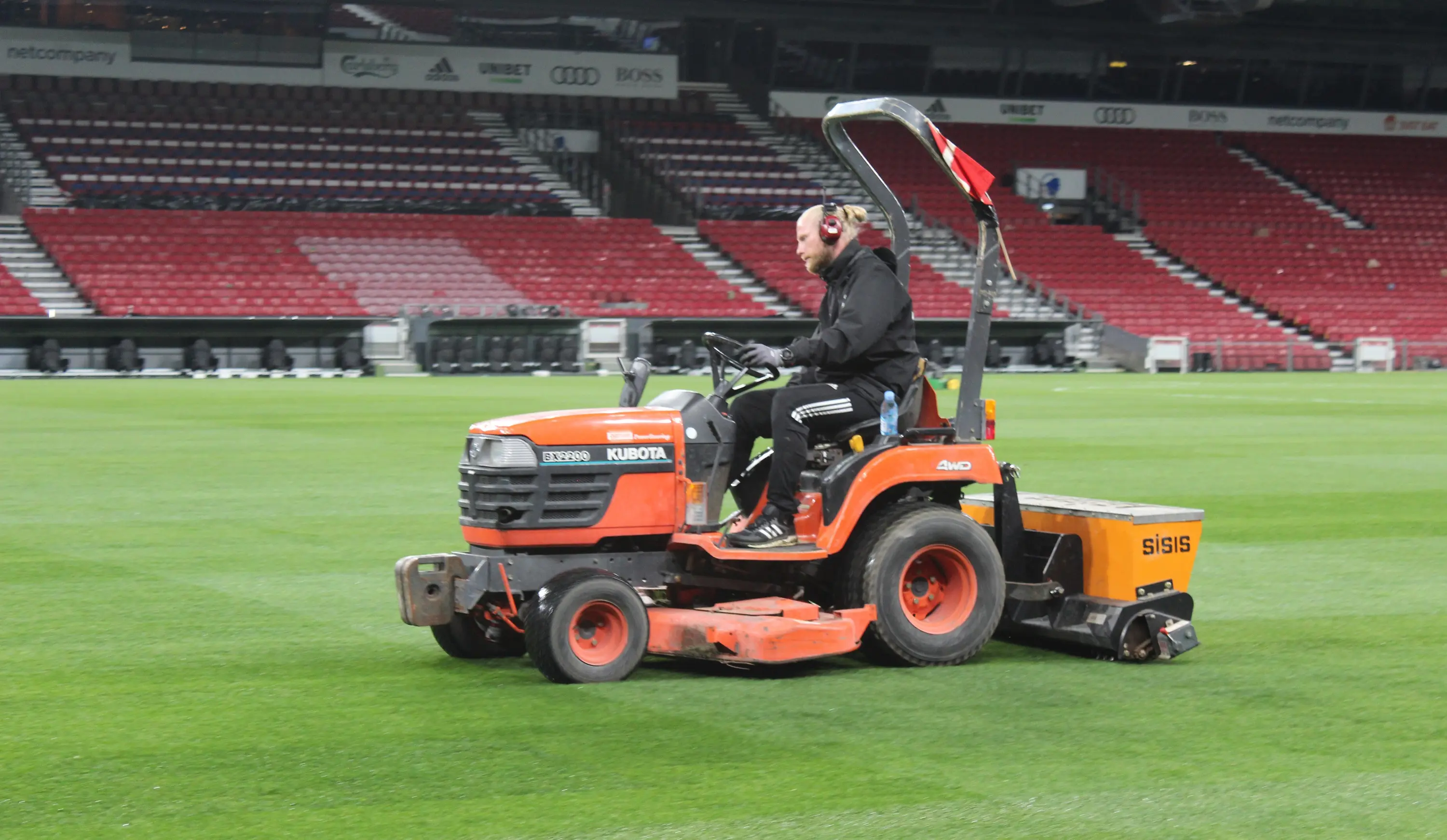
Behind the scenes, breeders work with thousands of tiny trial plots, testing and comparing different candidates under all sorts of conditions, heat, cold, heavy use, you name it. They’re looking at things like how well the grass handles wear, how quickly it recovers, how dense and uniform it is, and whether it can cope with changing climates without losing its game. And it’s definitely not an overnight success story. From the first cross to a finished variety, the process typically takes more than 10 years. So that perfect green pitch is really the result of a decade of science and fine-tuning.
What does plant variety protection mean in practice for a turfgrass breeder and why does it matter that this form of IP exists?
Mr. Oddershede: Plant variety protection allows breeders to register new varieties and control how they are produced and sold for a period of time. In simple terms, it ensures that the people who develop a new variety can actually benefit from it, and that matters a lot. Breeding new turfgrass varieties isn't exactly a quick or cheap project. It takes years of testing, expertise, and quite a bit of patience. Without some form of protection, it would be pretty hard to justify that kind of long-term investment.
That investment is exactly what a tournament like the 2026 FIFA World Cup demands. Breeders are essentially trying to create grasses that can handle heat, cold, drought, and heavy wear, and still look like a perfect green carpet on TV. To get there, varieties are put through what can only be described as a bit of a boot camp: tested across multiple locations for years, facing cold winters, hot and dry summers, and a whole lineup of diseases. When it comes to wear tolerance, it gets quite literal - heavy rollers with steel knobs are dragged across trial plots to mimic the impact of football players. It is essentially a torture chamber for turf, and only the most resilient candidates make it through.
The good news is that modern turfgrass varieties are already pretty versatile, performing well across a wide range of environments. Ahead of 2026, a broad selection has been tested alongside research led by institutions such as the University of Tennessee and Michigan State University. FIFA sets strict standards, and each stadium selects the best-performing solution based on both data and experience. That level of long-term, multi-location research depends on plant variety protection. It provides the financial foundation that makes it all possible.
Football is the obvious example this year, but turfgrass innovation runs through sport more broadly — golf, tennis, rugby, athletics. Are there varieties or breeding breakthroughs that have genuinely changed how a sport is played or experienced?
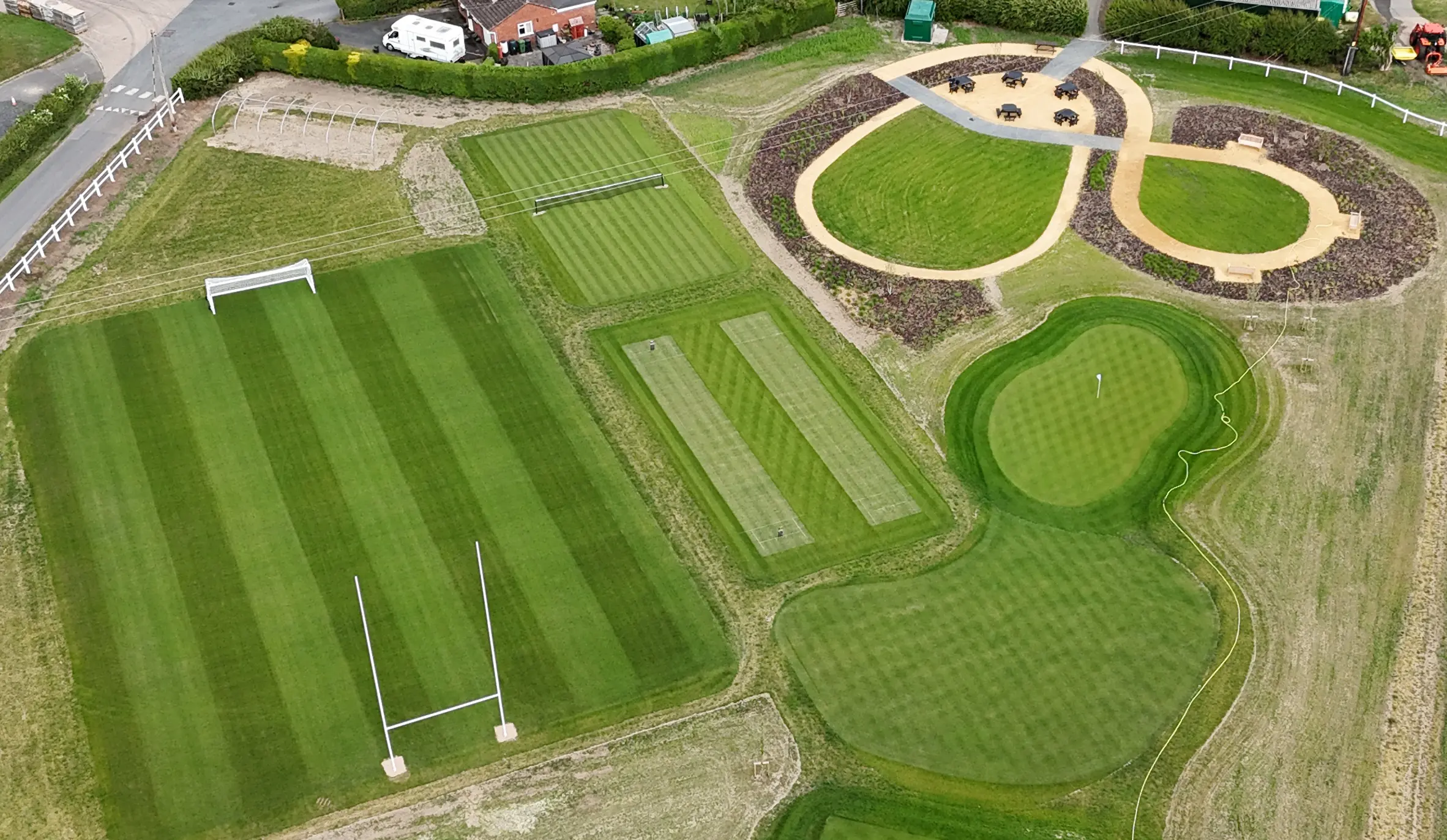
Mr. Oddershede: Absolutely! Maybe not in the same headline-grabbing way as a new carbon racket or a high-tech football boot, but turfgrass innovation has quietly changed the game in a lot of sports. Over the past decades, breeders have seriously upgraded what grass can do. Modern varieties offer better wear tolerance, disease resistance, density, and overall consistency. That might sound a bit technical, but in practice it means smoother putting greens in golf, more stable footing in rugby scrums, and football pitches that don’t turn into mud halfway through the match.
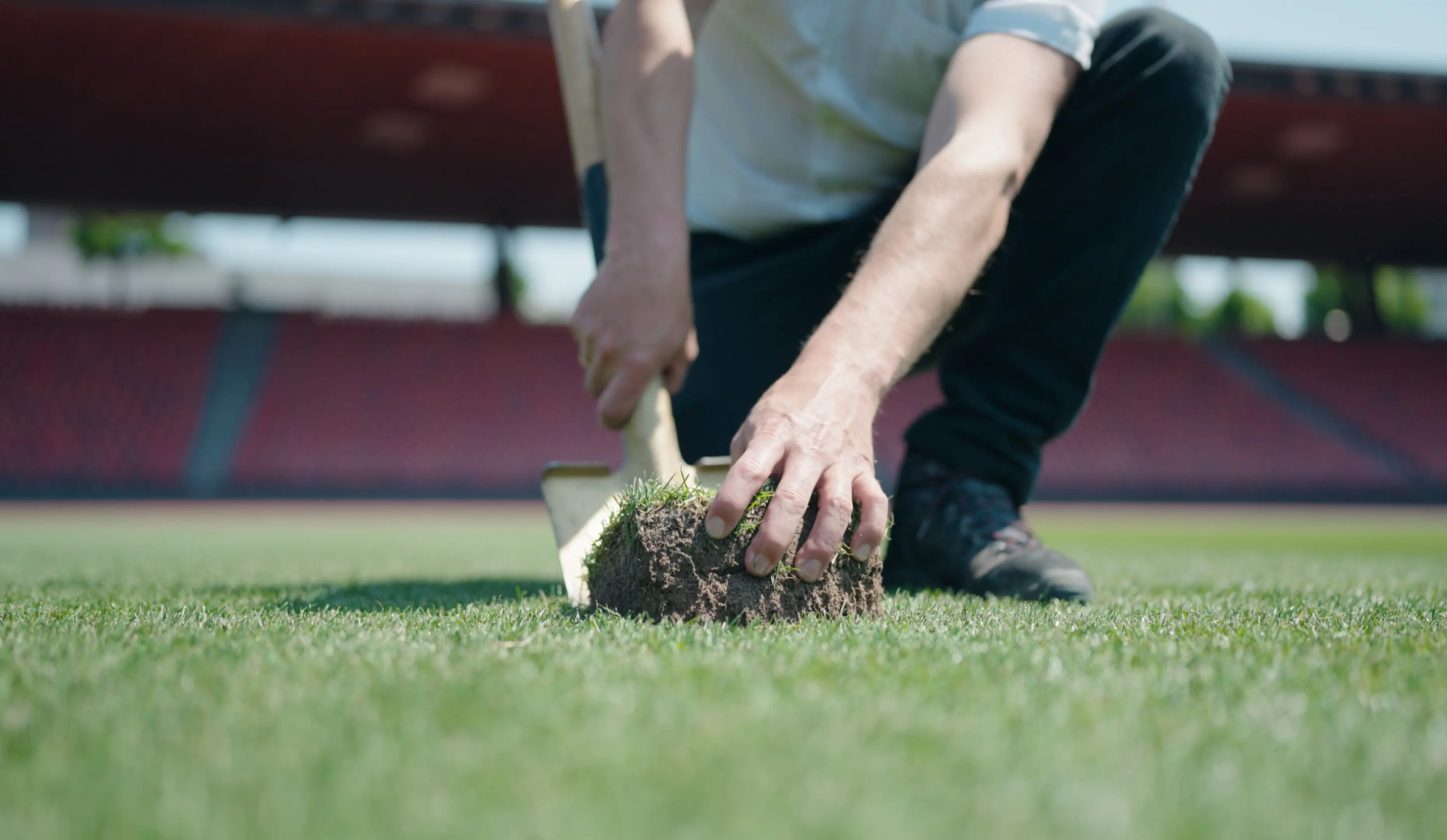
Combined with advanced turf management and hybrid systems, this has led to more reliable and durable surfaces. The result is smoother, faster, and more predictable play, as well as improved player safety. Players can trust their footing more, and matches are less likely to be decided by a bad bounce or a worn-out patch of turf. Different sports have very different requirements. Fine, dense grasses for golf greens versus highly durable mixtures for football and rugby. So breeding is highly specialised. Close collaboration with groundskeepers and sports organisations ensures that new varieties meet real-world performance needs. So breeders don’t aim for a one-size-fits-all solution. They’re basically tailoring grass like a bespoke suit for each sport.
Wimbledon is also famous for its grass courts. Is that grass a protected variety, and what is the story behind the science that goes into keeping it consistent year after year?
Mr. Oddershede: Ah yes, The Championships, Wimbledon- arguably the only place where the grass is almost as famous as the players. The short answer is: the exact grass varieties used at Wimbledon aren’t publicly disclosed. So no, you can’t just pop down to the garden centre and ask for the “Djokovic mix”. But in general, high-performance turfgrass like this is typically protected by plant breeders’ rights. This helps sustain the long-term investment needed to develop and maintain such quality. The focus is on perennial ryegrass with strong wear tolerance, rapid recovery, density, and visual consistency, which are essential traits for enduring an intense tournament schedule. And they really need it, because a Wimbledon court goes through a bit of a transformation during the tournament, especially around the baselines, where players more or less try to dig their way to Australia over two weeks. But genetics is only half the story. Consistency year after year comes from a combination of advanced genetics and highly specialised turf management. The result? Year after year, you get a surface that plays fast, looks immaculate, and behaves exactly how players expect it to - more or less down to the millimetre.
Without plant variety protection, would the level of investment we see in professional sports turf research be possible? What happens in markets or contexts where that protection is weak or absent?
Mr. Oddershede: Short answer: probably not. Developing new turfgrass varieties takes years of work and serious investment. Plant variety protection is what makes that effort worthwhile, because it gives breeders a fair chance to earn back their costs. Without it, the incentive to invest drops, and so does the pace of innovation. In markets where protection is weak, you typically see fewer new varieties and slower progress. And in sports turf, where expectations are extremely high, that can quickly become noticeable, both in performance and in the ability to handle challenges like climate stress and heavy use.
Turfgrass breeding is not the most visible corner of the plant IP world. What would you want the public or a football fan watching the World Cup to understand about what breeders contribute to the sports they love?
Mr. Oddershede: If you don’t notice the grass, it’s doing its job. The aim is to provide a surface that is uniform, resilient, and reliable - something players can trust without thinking about it. That “invisible” performance is the result of years of breeding focused on durability, recovery, and consistency. It’s usually only when a pitch underperforms that it gets attention - and even then, the issue is often related to construction or maintenance. So if there’s one thing to keep in mind while watching the World Cup, it’s this: that perfect green surface isn’t just there by chance. It’s the result of long-term work by breeders who’ve basically trained the grass to perform at the highest level, quietly supporting the game from kick-off to final whistle.

Climate change is already affecting playing surfaces — droughts, heat stress, waterlogging. How is the turfgrass breeding community responding, and how does IP protection factor into funding that response?
Mr. Oddershede: Climate change is making turf management more complex, with more frequent drought, heat, heavy rainfall, and disease pressure.
Breeders are responding by developing more resilient varieties, testing them under controlled stress conditions and across different environments. The goal is to produce grasses that require fewer inputs while maintaining consistent performance. This kind of research is resource-intensive, and plant variety protection plays a key role by ensuring that breeders can continue investing in solutions for future conditions.
If you could point to one variety, one breakthrough, or one moment that captures what plant variety protection has made possible in sports turf, what would it be?
Mr. Oddershede: A strong example is the development of tetraploid 4turf® perennial ryegrass varieties. These have four sets of chromosomes instead of the usual two, which translates into a performance boost with faster establishment, stronger root systems, and improved stress tolerance and disease resistance. For sports turf, that means better recovery and more durable playing surfaces under heavy use. Breakthroughs like this are the result of long-term breeding efforts. Plant variety protection is what makes that kind of innovation possible, by providing a framework that supports continued investment and progress.
The scale of turfgrass innovation is reflected in the numbers. According to the UPOV PLUTO database, nearly 7,000 varieties that can be used as turfgrass are currently protected in UPOV members, spanning football pitches, cricket grounds, golf courses, and multi-use sports surfaces around the world. Each one represents a long-term investment in innovation, made possible by plant variety protection.
This is the second and final story in a short series published by UPOV in connection with World IP Day 2026, under the theme "IP and Sports: Ready, Set, Innovate!" These conversations offer a window into the world of turfgrass innovation, and the intellectual property system that keeps it growing.